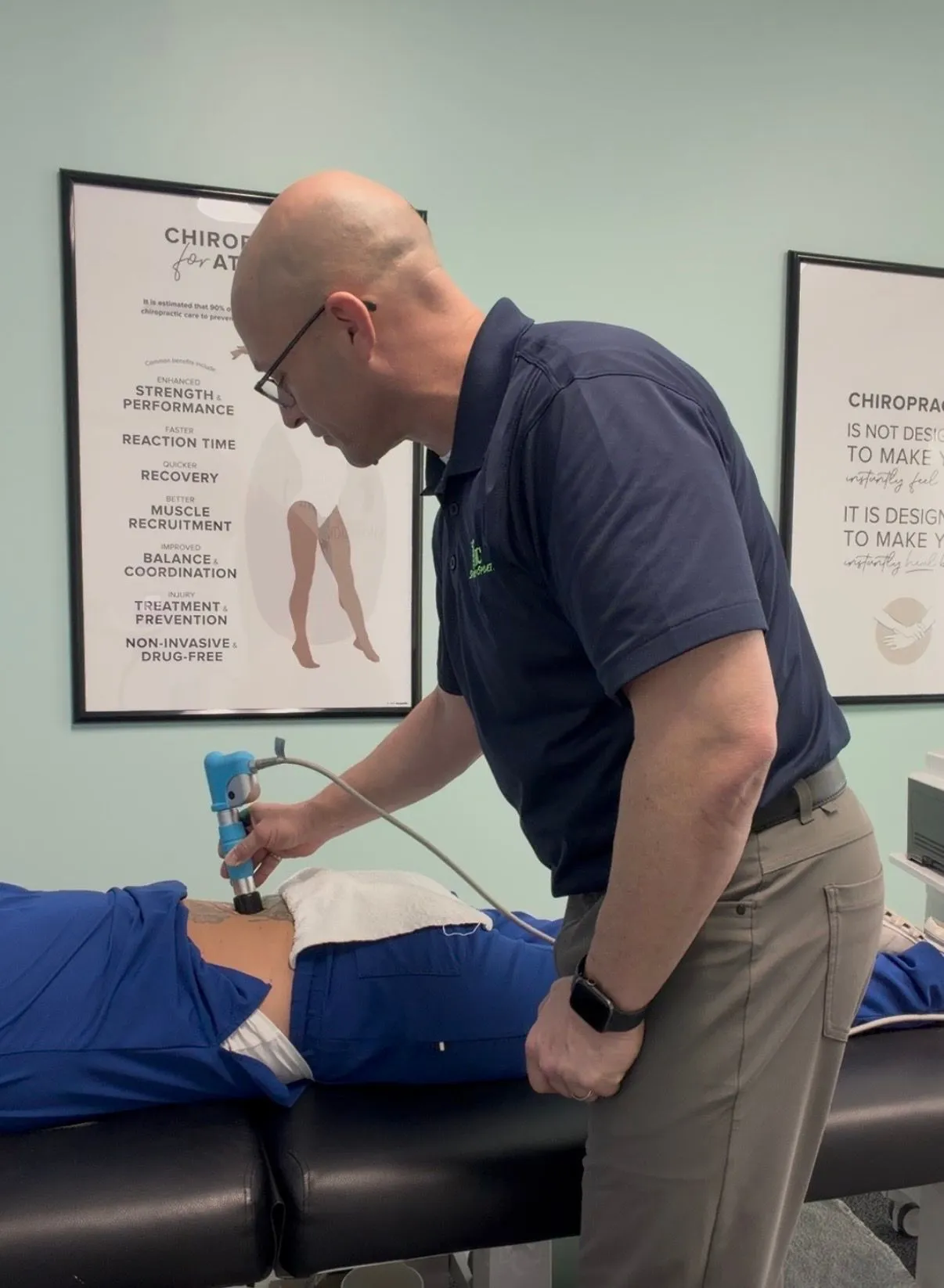
Shockwave therapy is a non-invasive treatment that uses acoustic sound waves to stimulate healing, reduce pain, and promote tissue regeneration in musculoskeletal conditions
Key points:
- Extracorporeal shockwave therapy (ESWT) for musculoskeletal problems; two main forms are focused (fESWT) for deeper, precise targets and radial (rESWT) for broader, more superficial areas.
- Common uses: chronic tendinopathies (plantar fasciitis, Achilles, patellar, lateral epicondylitis/tennis elbow), calcific shoulder tendinitis, greater trochanteric pain, delayed bone healing, and some myofascial trigger points. Evidence is moderate to strong for plantar fasciitis and calcific shoulder tendinopathy.
- What sessions are like: 5-15 minutes, typically 3–6 sessions spaced 3-5 days apart. Typically minimal discomfort during application for most patients can be expected butsoreness or redness may follow for a day or two.
- How it compares: it may reduce the need for steroid injections or surgery in some cases, but it’s usually part of a broader rehab plan (stretching, strengthening, load management).
- Shockwave Therapy works via several mechanisms. 1. Stimulating new blood vessel formation, increasing oxygen, nutrients, and growth factors to damaged tissue. 2. Enhances cell metabolism, accelerating collagen production, tissue repair, and waste removal. 3. Activates stem cells, which can differentiate into various tissue types to aid regeneration. 4. Breaks down calcium deposits and scar tissue, which are then naturally reabsorbed by the body. 5. Reduces inflammation and pain, partly by releasing endorphins and calming overactive pain. 6. Promotes osteoprogenitor differentiation in bone-related conditions, supporting bone healing.
BENEFITS OF SHOCKWAVE THERAPY
- Non-invasive with no downtime
- Reduces pain and inflammation
- Improves mobility and functionality
- Stimulates natural tissue regeneration
- Can be an alternative to surgery or long-term medication
Shockwave therapy represents a safe and effective option for patients seeking to accelerate healing and manage chronic pain without invasive procedures, making it increasingly popular in sports medicine, orthopedics, chiropractic and physiotherapy.
If you’re considering it, the useful next step is to match the type (focused vs radial) and protocol to your specific diagnosis and confirm there aren’t any contraindications. Talk to Dr. Kallio with NC Spine and Sports in Pittsboro, NC to see if Shockwave Therapy is right for you.